Food Budget App — Plan meals and groceries without overspending
A food budget isn't only about how much you spend at the till — it's about what you cook, what you waste, and how often you order takeout because there's nothing in the fridge. GroceryTracker Pro is a food budget app that connects your scanned receipts to your real eating patterns: the cost-per-meal of your usual recipes, the categories that drive most of your bill, and the food that you keep buying but never finishing. Less waste, less guesswork, more meals from the same money.
Why food spending is different from "grocery spending"
Most household budget categories — rent, utilities, insurance — are roughly fixed. Food is the opposite: every meal is a small spending decision, and a typical family makes 60–90 of them a month. That's why food spending creeps in ways no other category does. A few extra takeout nights, a Costco run that included three impulse items, a week of produce that wilted in the drawer — none of these feel like budget breaks individually, but together they drive 20–30% of an average grocery bill.
A food budget app helps because it changes the unit of measurement. Instead of asking "did we stay under $800?", you start asking "what does our family actually eat for $800?". That shift — from monitoring a number to understanding a pattern — is where lasting changes come from.
Connecting groceries to meals
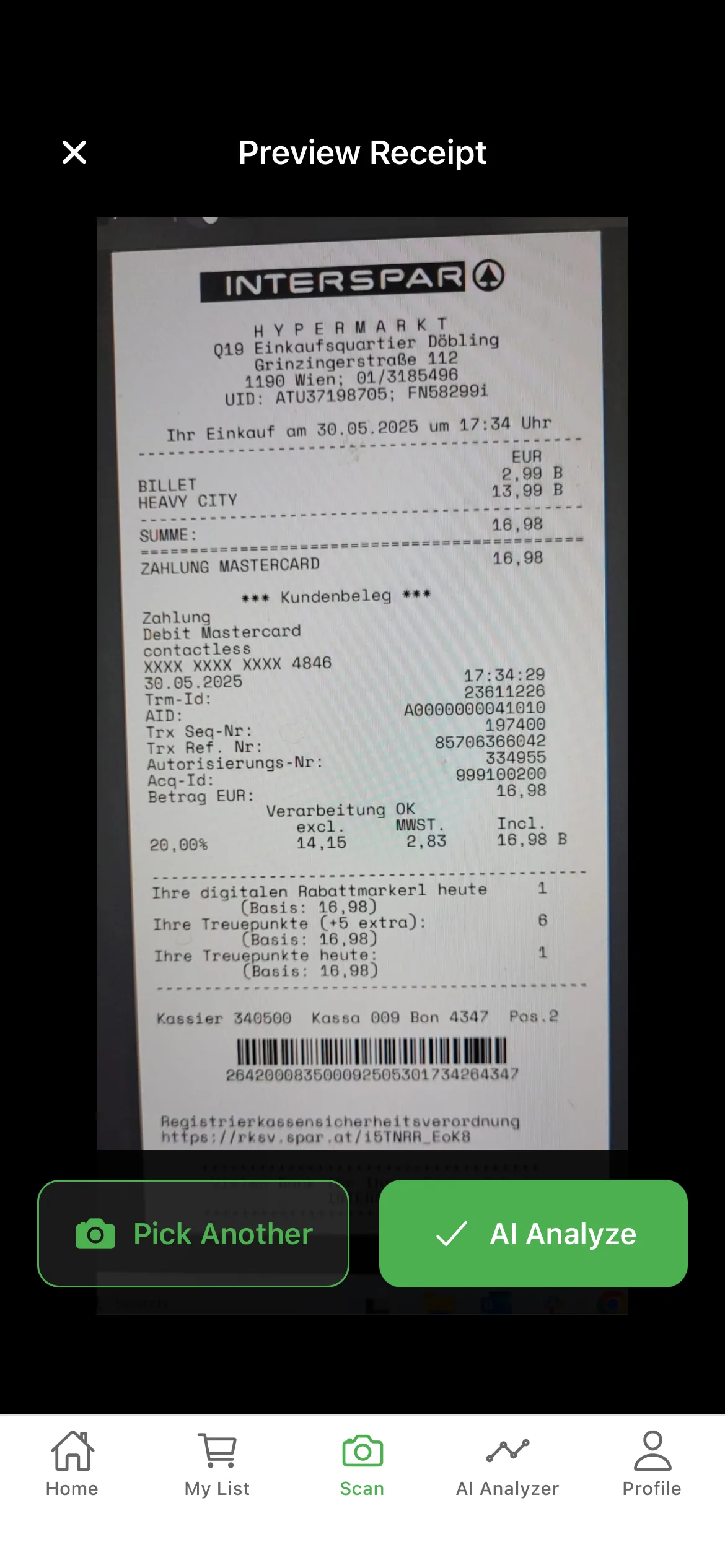
After 30 days of receipt scanning, your data shows the rhythm of how your household actually eats: which proteins you buy weekly, which produce you buy and don't finish, which snacks dominate Friday-evening trips. From there, the AI assistant in the app can suggest meal plans that use what you already buy regularly — not generic recipes from a cookbook, but ones built around your normal grocery list.
The result is a tighter food budget without feeling restrictive. Most users discover they can make 8–10 meals from a normal weekly shop, but they were only making 4–5 because the planning never matched the buying. Bridging that gap is usually worth $80–150 a month — the difference between a takeout dinner and a meal you already had ingredients for.
Food budgeting features that actually save money
- Cost-per-category breakdown — See what share of your food budget goes to produce, meat, dairy, grains, snacks, and beverages.
- Repeat purchase detection — Spot the items you buy every shop — the foundation of a meal plan that fits your real life.
- Waste-flag suggestions — Items you buy regularly but rarely use up get flagged so you can buy smaller quantities.
- Per-store meal-cost comparison — Discover which store gives you the cheapest version of your usual weekly basket.
- Inflation-adjusted view — See whether your food spending is actually higher this year — or just feels that way because prices went up.
- Family-size awareness — Set how many people you feed; the app calibrates recommendations to your household size.
How the AI assistant makes food planning easier
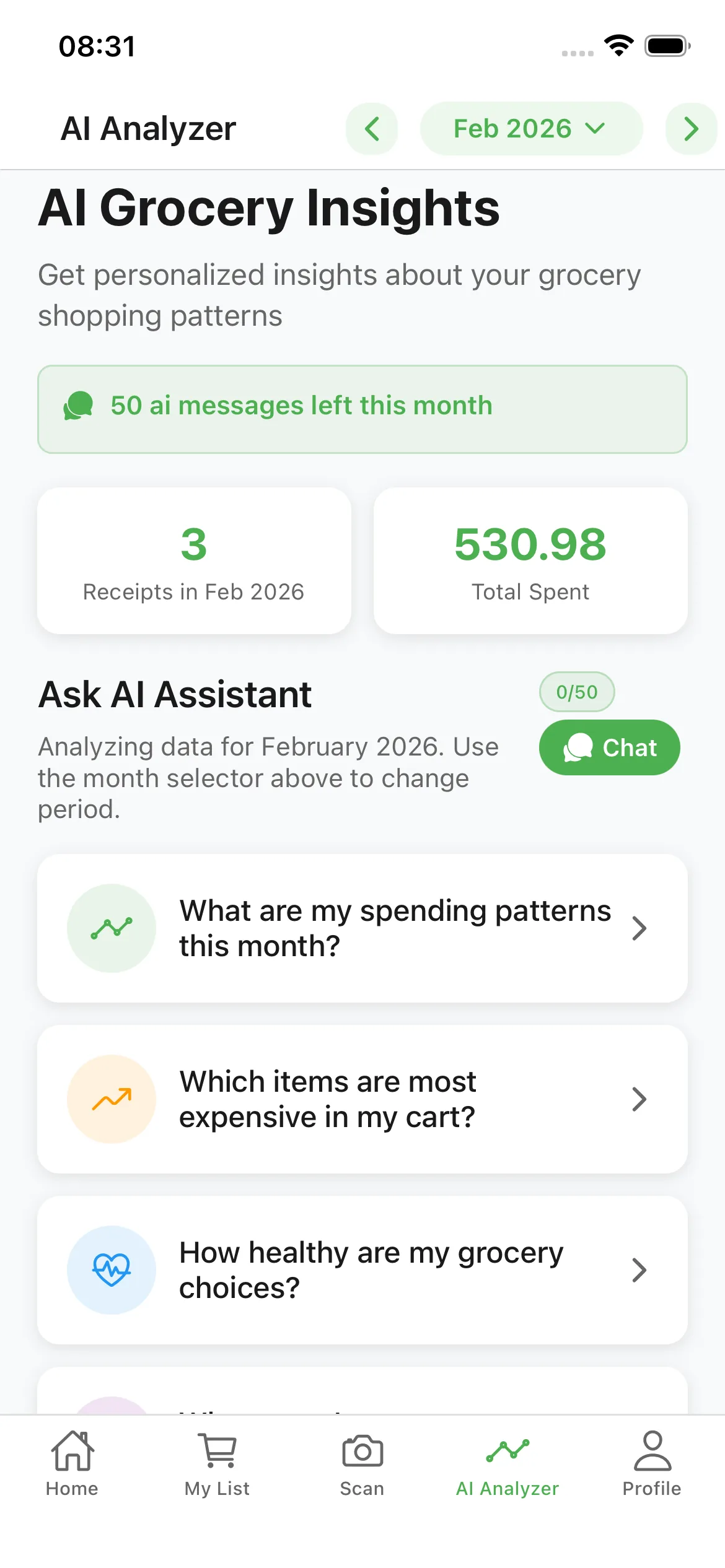
The built-in AI assistant answers questions in plain language: "What did I spend on snacks last month?", "Is dairy more expensive at Aldi or Lidl right now?", "What's my cost-per-meal if I cook three pasta dinners a week?". Because the AI works from your own receipts, the answers are specific and actionable — not generic advice copied from a personal-finance blog.
Most users find the assistant most useful for two questions: where can I cut without giving up things I actually like? and which meals give me the best value per dollar?. Those are the questions that actually move a food budget — and they're impossible to answer without line-item data from your real shopping history.
Frequently Asked Questions
What does a food budget app do that a regular budget app can't?
A food budget app reads every line item from your receipts, so it understands which foods drive your spending, which items you waste, and how your meals translate into dollars. Regular budget apps only see the total at the till.
Will the app help me plan meals?
The AI assistant suggests meal plans built from items you already buy regularly. It doesn't push generic recipes — it works from your actual purchase history and your household size.
How much can a typical family save?
Most families identify $80–150/month in savings within 60 days, mostly from reduced food waste and fewer last-minute takeout meals. The savings come from visibility, not restriction.
Does the app track takeout and restaurant spending?
It can. Scan or import any food-related receipt — supermarket, takeout, restaurant, food delivery — and the app categorizes each one so you see your true total food spending.
Is the app suitable for single-person budgets?
Yes. Set your household size to 1 and the app calibrates meal-cost suggestions, weekly-shop expectations, and waste flags to match a one-person kitchen.
Start tracking your grocery spending
Free on iOS & Android — no signup required to start scanning.
